
Description
| Product ID: | 9789633866160 |
| Product Form: | Hardback |
| Country of Manufacture: | HU |
| Title: | Sugarland |
| Subtitle: | The Transformation of the Countryside in Communist Albania |
| Authors: | Author: Artan R. Hoxha |
| Page Count: | 306 |
| Subjects: | European history, European history |
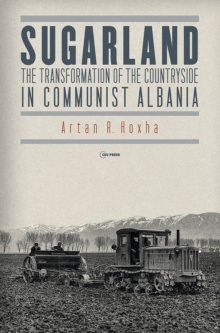
| Description: | In this historical monograph on non-urban communist Albania, Artan Hoxha discusses the ambitious development project that turned a swampland into a site of sugar production after 1945. The author seeks to free the history of Albanian communism from the stereotypes that still circulate about it with stigmas of an aberration, paranoia, extreme nationalism, and xenophobia. This micro-history of the agricultural and industrial transformation of a zone in southeastern Albania, explores a wide range of issues including modernization, development, and social, cultural, and economic policies. In addition to analyzing the collectivization of agriculture, Hoxha shows how communism affected the lives of ordinary rural people. As elsewhere in the Communist Bloc, the Albanian regime borrowed developmental projects from the past and implemented them using social mobilization and a command economy. The abundant archival resources along with interviews in the field attest to the authorities’ efforts to increase consumption and to radically transform people’s tastes. But the book argues that despite the repressive environment, people involved in the sugar project were not simply passive receivers of models from the nation's capital. The author also describes that—in defiance of Cold War bipolarity—technological requirements and social policy considerations required a degree of engagement with the broader world. In this historical monograph on non-urban communist Albania, Artan Hoxha discusses the ambitious development project that turned a swampland into a site of sugar production after 1945. The author seeks to free the history of Albanian communism from the stereotypes that still circulate about it with stigmas of an aberration, paranoia, extreme nationalism, and xenophobia. This micro-history of the agricultural and industrial transformation of a zone in southeastern Albania, explores a wide range of issues including modernization, development, and social, cultural, and economic policies. In addition to analyzing the collectivization of agriculture, Hoxha shows how communism affected the lives of ordinary rural people. As elsewhere in the Communist Bloc, the Albanian regime borrowed developmental projects from the past and implemented them using social mobilization and a command economy. The abundant archival resources along with interviews in the field attest to the authorities’ efforts to increase consumption and to radically transform people’s tastes. But the book argues that despite the repressive environment, people involved in the sugar project were not simply passive receivers of models from the nation''s capital. The author also describes that—in defiance of Cold War bipolarity—technological requirements and social policy considerations required a degree of engagement with the broader world. |
| Imprint Name: | Central European University Press |
| Publisher Name: | Central European University Press |
| Country of Publication: | GB |
| Publishing Date: | 2023-02-28 |