
Description
| Product ID: | 9783958862869 |
| Product Form: | Paperback / softback |
| Country of Manufacture: | GB |
| Title: | Advances in biomedical NMR with spatial resolution |
| Authors: | Author: Dr Jennifer, Ph.D. Flohr |
| Page Count: | 158 |
| Subjects: | Biomedical engineering, Biomedical engineering |
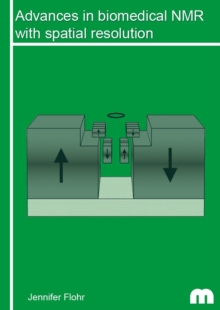
| Description: | Select Guide Rating In modern medicine, magnetic resonance imaging (MRI) is an essential diagnostic tool, which enables physicians to detect a great variety of diseases and physical injuries. The scope of possibilities encompasses neuro-, cardiovascular-, musculoskeletal-, hepatobiliary- and gastrointestinal imaging as well a magnetic resonance angiography. Besides commercially available MRI scanners, low magnetic field devices gain more and more attention because they are more compact, mostly portable, easier to handle due to the lack of cryogenic coolants, and usually come with a large cost saving. In this thesis, high magnetic field devices and unilateral NMR sensors are deployed to explore different biomedical topics. Imaging techniques are used to study the flow inside aneurysms—enlargements of blood vessels in the human body, whose rupture can lead to severe health issues. In an experimental flow set-up, different fluids and flow velocities are tested inside silicon aneurysm models with and without stents. These narrow tubes, which commonly consist of a metallic network, are inserted into a vessel to cut the aneurysm from the blood stream. TheNMR-MOUSER (MObileUniversal Surface Explorer), a sensor design first conceived in the mid 90s by Blümich and Blümler, and its derivative — the Fourier NMR-MOUSE — are utilized to study human and porcine skin. Outer skin layers are investigated in terms of diffusion and relaxation time profiling in laboratory and clinical studies. They assess the structural composition and susceptibility to different substances, and identify carcinogenic processes and the effect of aging and renal insufficiency. In modern medicine, magnetic resonance imaging (MRI) is an essential diagnostic tool, which enables physicians to detect a great variety of diseases and physical injuries. The scope of possibilities encompasses neuro-, cardiovascular-, musculoskeletal-, hepatobiliary- and gastrointestinal imaging as well a magnetic resonance angiography. Besides commercially available MRI scanners, low magnetic field devices gain more and more attention because they are more compact, mostly portable, easier to handle due to the lack of cryogenic coolants, and usually come with a large cost saving. In this thesis, high magnetic field devices and unilateral NMR sensors are deployed to explore different biomedical topics. Imaging techniques are used to study the flow inside aneurysms—enlargements of blood vessels in the human body, whose rupture can lead to severe health issues. In an experimental flow set-up, different fluids and flow velocities are tested inside silicon aneurysm models with and without stents. These narrow tubes, which commonly consist of a metallic network, are inserted into a vessel to cut the aneurysm from the blood stream. TheNMR-MOUSER (MObileUniversal Surface Explorer), a sensor design first conceived in the mid 90s by Blümich and Blümler, and its derivative — the Fourier NMR-MOUSE — are utilized to study human and porcine skin. Outer skin layers are investigated in terms of diffusion and relaxation time profiling in laboratory and clinical studies. They assess the structural composition and susceptibility to different substances, and identify carcinogenic processes and the effect of aging and renal insufficiency. |
| Imprint Name: | Verlag G. Mainz |
| Publisher Name: | Verlag G. Mainz |
| Country of Publication: | GB |
| Publishing Date: | 2019-05-24 |