
Use coupon code “MARCH20” for a 20% discount on all items! Valid until 31-03-2025

Site Logo
Search Suggestions

      Royal Mail  express delivery to UK destinations

      Regular sales and promotions

      Stock updates every 20 minutes!

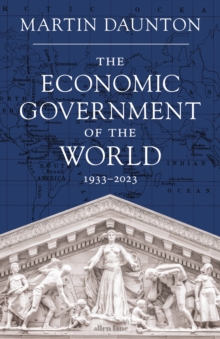
      The Economic Government of the World: 1933-2023

      1 in stock

      Firm sale: non returnable item
      SKU 9781846141713 Categories ,
      Select Guide Rating
      An epic history of money, trade and development since 1933In 1933, Keynes reflected on the crisis of the Great Depression that arose from individualistic capitalism: 'It is not intelligent, it is not beautiful, it is not just, it is not virtuous - and it doesn't deliver the go...

      £45.00

      Buy new:

      Delivery: UK delivery Only. Usually dispatched in 1-2 working days.

      Shipping costs: All shipping costs calculated in the cart or during the checkout process.

      Standard service (normally 2-3 working days): 48hr Tracked service.

      Premium service (next working day): 24hr Tracked service – signature service included.

      Royal mail: 24 & 48hr Tracked: Trackable items weighing up to 20kg are tracked to door and are inclusive of text and email with ‘Leave in Safe Place’ options, but are non-signature services. Examples of service expected: Standard 48hr service – if ordered before 3pm on Thursday then expected delivery would be on Saturday. If Premium 24hr service used, then expected delivery would be Friday.

      Signature Service: This service is only available for tracked items.

      Leave in Safe Place: This option is available at no additional charge for tracked services.

      Description

      Product ID:9781846141713
      Product Form:Hardback
      Country of Manufacture:GB
      Title:The Economic Government of the World
      Subtitle:1933-2023
      Authors:Author: Martin Daunton
      Page Count:1024
      Subjects:General and world history, General & world history, Globalization, International economics, Political economy, Economic history, Globalization, International economics, Political economy, Economic history, 20th century, 21st century
      Description:Select Guide Rating
      An epic history of money, trade and development since 1933In 1933, Keynes reflected on the crisis of the Great Depression that arose from individualistic capitalism: 'It is not intelligent, it is not beautiful, it is not just, it is not virtuous - and it doesn't deliver the goods ... But when we wonder what to put in its place, we are extremely perplexed.' We are now in a similar state of perplexity, wondering how to respond to the economic problems of the world. Martin Daunton examines the changing balance over ninety years between economic nationalism and globalization, explaining why one economic order breaks down and how another one is built, in a wide-ranging history of the institutions and individuals who have managed the global economy. In 1933, the World Monetary and Economic Conference brought together the nations of the world: it failed. Trade and currency warfare led to economic nationalism and a turn from globalization that culminated in war. During the Second World War, a new economic order emerged - the embedded liberalism of Bretton Woods, the International Monetary Fund and the International Bank for Reconstruction and Development - and the post-war General Agreement on Tariffs and Trade. These institutions and their rules created a balance between domestic welfare and globalization, complemented by a social contract between labour, capital and the state to share the benefits of economic growth. Yet this embedded liberalism reflected the interests of the 'west' in the Cold War: in the 1970s, it faced collapse, caused by its internal weaknesses and the breakdown of the social contract, and was challenged by the Third World as a form of neo-colonialism. It was succeeded by neoliberalism, financialisation and hyper-globalization. In 2008, the global financial crash exposed the flaws of neoliberalism without leading to a fundamental change. Now, as leading nations are tackling the fall-out from Covid-19 and the threats of inflation, food security and the existential risk of climate change, Martin Daunton calls for a return to a globalization that benefits many of the world's poor and a fairer capitalism that delivers domestic welfare and equality. The Economic Government of the World is the first history to show how trade, international monetary relations, capital mobility and development impacted on and influenced each other. Martin Daunton places these economic relations in the geo-political context of the twentieth century, and considers the importance of economic ideas and of political ideology, of electoral calculations and institutional design. The book rests on extensive archival research to provide a powerful analysis of the origins of our current global crisis, and suggests how we might build a fairer international order.

      An epic history of money, trade and development since 1933

      In 1933, Keynes reflected on the crisis of the Great Depression that arose from individualistic capitalism: ''It is not intelligent, it is not beautiful, it is not just, it is not virtuous - and it doesn''t deliver the goods ... But when we wonder what to put in its place, we are extremely perplexed.'' We are now in a similar state of perplexity, wondering how to respond to the economic problems of the world.

      Martin Daunton examines the changing balance over ninety years between economic nationalism and globalization, explaining why one economic order breaks down and how another one is built, in a wide-ranging history of the institutions and individuals who have managed the global economy. In 1933, the World Monetary and Economic Conference brought together the nations of the world: it failed. Trade and currency warfare led to economic nationalism and a turn from globalization that culminated in war. During the Second World War, a new economic order emerged - the embedded liberalism of Bretton Woods, the International Monetary Fund and the International Bank for Reconstruction and Development - and the post-war General Agreement on Tariffs and Trade. These institutions and their rules created a balance between domestic welfare and globalization, complemented by a social contract between labour, capital and the state to share the benefits of economic growth.

      Yet this embedded liberalism reflected the interests of the ''west'' in the Cold War: in the 1970s, it faced collapse, caused by its internal weaknesses and the breakdown of the social contract, and was challenged by the Third World as a form of neo-colonialism. It was succeeded by neoliberalism, financialisation and hyper-globalization. In 2008, the global financial crash exposed the flaws of neoliberalism without leading to a fundamental change. Now, as leading nations are tackling the fall-out from Covid-19 and the threats of inflation, food security and the existential risk of climate change, Martin Daunton calls for a return to a globalization that benefits many of the world''s poor and a fairer capitalism that delivers domestic welfare and equality.

      The Economic Government of the World is the first history to show how trade, international monetary relations, capital mobility and development impacted on and influenced each other. Martin Daunton places these economic relations in the geo-political context of the twentieth century, and considers the importance of economic ideas and of political ideology, of electoral calculations and institutional design. The book rests on extensive archival research to provide a powerful analysis of the origins of our current global crisis, and suggests how we might build a fairer international order.


      Imprint Name:Allen Lane
      Publisher Name:Penguin Books Ltd
      Country of Publication:GB
      Publishing Date:2023-05-11

      Additional information

      Weight1334 g
      Dimensions166 × 241 × 50 mm