
Use coupon code “MARCH20” for a 20% discount on all items! Valid until 31-03-2025

Site Logo
Search Suggestions

      Royal Mail  express delivery to UK destinations

      Regular sales and promotions

      Stock updates every 20 minutes!

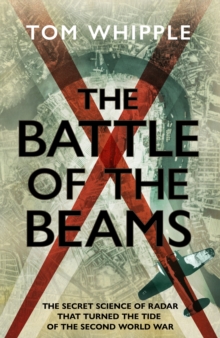
      The Battle of the Beams: The secret science of radar that turned the tide of the Second World War

      2 in stock

      Firm sale: non returnable item
      SKU 9781787634138 Categories ,
      Select Guide Rating
      'Deeply researched and engagingly written' The Times'Has the pace and style of a well-crafted thriller' Mail on Sunday'Chock full of memorable characters and written with all the drama and pace of a Robert Harris thriller' Rowland White, author of Harrier 809The radio war of 1...

      £20.00

      Buy new:

      Delivery: UK delivery Only. Usually dispatched in 1-2 working days.

      Shipping costs: All shipping costs calculated in the cart or during the checkout process.

      Standard service (normally 2-3 working days): 48hr Tracked service.

      Premium service (next working day): 24hr Tracked service – signature service included.

      Royal mail: 24 & 48hr Tracked: Trackable items weighing up to 20kg are tracked to door and are inclusive of text and email with ‘Leave in Safe Place’ options, but are non-signature services. Examples of service expected: Standard 48hr service – if ordered before 3pm on Thursday then expected delivery would be on Saturday. If Premium 24hr service used, then expected delivery would be Friday.

      Signature Service: This service is only available for tracked items.

      Leave in Safe Place: This option is available at no additional charge for tracked services.

      Description

      Product ID:9781787634138
      Product Form:Hardback
      Country of Manufacture:GB
      Title:The Battle of the Beams
      Subtitle:The secret science of radar that turned the tide of the Second World War
      Authors:Author: Tom Whipple
      Page Count:320
      Subjects:Biography: science, technology and medicine, Biography: science, technology & medicine, Second World War, Theory of warfare and military science, History of science, Radar technology, Second World War, Theory of warfare & military science, History of science, Radar, c 1939 to c 1945 (including WW2)
      Description:Select Guide Rating
      'Deeply researched and engagingly written' The Times'Has the pace and style of a well-crafted thriller' Mail on Sunday'Chock full of memorable characters and written with all the drama and pace of a Robert Harris thriller' Rowland White, author of Harrier 809The radio war of 1939-45 is one of the great scientific battles in history. This is the story of that war. Relying on first-hand accounts as well as papers recently released by the Admiralty, The Battle of the Beams fills a huge missing piece in the canon of WW2 literature. It combines history, science, derring do and dogged determination and will appeal as much to fans of WW2 history as to those fascinated by the science behind the beams that changed our lives. The British believed that, through ingenuity and scientific prowess, they alone have a war-winning weapon: radar. They are wrong. The Germans have it too. They believe that their unique maritime history means their pilots have no need of navigational aids. Flying above the clouds they, like the seafarers of old, had the stars to guide them, and that is all that is required. They are wrong. Most of the bombs the RAF will drop in the first years of the war land miles from their target. They also believe that the Germans, without the same naval tradition, will never be able to find targets at night. They are, again, wrong. In 1939 the Germans don't just have radar to spot planes entering their airspace, they have radio beams to guide their own planes into enemy airspace. Luckily there was one young engineer, Reginald Jones, helping the British government with their own scientific developments. In June 1940, when Jones quietly explained the beams the Germans had devised to a room full of disbelieving sceptics, Churchill later described the moment as like sitting in the parlour while Sherlock Holmes finally reveals the killer. Churchill immediately supported Jones's efforts to develop radar technology that went on to help the Allies win the war.

      ''Deeply researched and engagingly written'' The Times
      ''Has the pace and style of a well-crafted thriller'' Mail on Sunday
      ''Chock full of memorable characters and
      written with all the drama and pace of a Robert Harris thriller'' Rowland White, author of Harrier 809

      The radio war of 1939-45 is one of the great scientific battles in history.
      This is the story of that war.

      Relying on first-hand accounts as well as papers recently released by the Admiralty, The Battle of the Beams fills a huge missing piece in the canon of WW2 literature.

      It combines history, science, derring do and dogged determination and will appeal as much to fans of WW2 history as to those fascinated by the science behind the beams that changed our lives.

      The British believed that, through ingenuity and scientific prowess, they alone have a war-winning weapon: radar. They are wrong. The Germans have it too.

      They believe that their unique maritime history means their pilots have no need of navigational aids. Flying above the clouds they, like the seafarers of old, had the stars to guide them, and that is all that is required. They are wrong. Most of the bombs the RAF will drop in the first years of the war land miles from their target.

      They also believe that the Germans, without the same naval tradition, will never be able to find targets at night. They are, again, wrong. In 1939 the Germans don''t just have radar to spot planes entering their airspace, they have radio beams to guide their own planes into enemy airspace.

      Luckily there was one young engineer, Reginald Jones, helping the British government with their own scientific developments. In June 1940, when Jones quietly explained the beams the Germans had devised to a room full of disbelieving sceptics, Churchill later described the moment as like sitting in the parlour while Sherlock Holmes finally reveals the killer. Churchill immediately supported Jones''s efforts to develop radar technology that went on to help the Allies win the war.


      Imprint Name:Bantam (Transworld)
      Publisher Name:Transworld Publishers Ltd
      Country of Publication:GB
      Publishing Date:2023-05-11

      Additional information

      Weight526 g
      Dimensions164 × 243 × 31 mm