
Description
| Product ID: | 9781501359132 |
| Product Form: | Paperback / softback |
| Country of Manufacture: | GB |
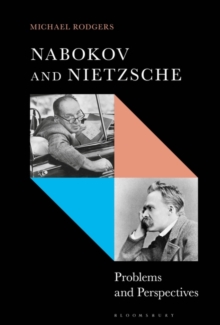
| Title: | Nabokov and Nietzsche |
| Subtitle: | Problems and Perspectives |
| Authors: | Author: Dr Michael Rodgers |
| Page Count: | 192 |
| Subjects: | Literary studies: c 1900 to c 2000, Literary studies: from c 1900 -, Literary studies: fiction, novelists and prose writers, Philosophical traditions and schools of thought, Literary studies: fiction, novelists & prose writers, Western philosophy: c 1600 to c 1900 |
| Description: | Select Guide Rating Awarded the Jane Grayson Prize by the International Vladimir Nabokov SocietyShortlisted for The European Society for the Study of English (ESSE) Book AwardNabokov and Nietzsche: Problems and Perspectives addresses the many knotted issues in the work of Vladimir Nabokov – Lolita’s moral stance, Pnin’s relationship with memory, Pale Fire’s ambiguous internal authorship – that often frustrate interpretation. It does so by arguing that the philosophy of Friedrich Nietzsche, as both a conceptual instrument and a largely unnoticed influence on Nabokov himself, can help to untie some of these knots. The study addresses the fundamental problems in Nabokov's writing that make his work perplexing, mysterious and frequently uneasy rather than simply focusing on the literary puzzles and games that, although inherent, do not necessarily define his body of work. Michael Rodgers shows that Nietzsche’s philosophy provides new, but not always palatable, perspectives in order to negotiate interpretative impasses, and that the uneasy aspects of Nabokov’s work offer the reader manifold rewards. Awarded the Jane Grayson Prize by the International Vladimir Nabokov SocietyShortlisted for The European Society for the Study of English (ESSE) Book AwardNabokov and Nietzsche: Problems and Perspectives addresses the many knotted issues in the work of Vladimir Nabokov – Lolita’s moral stance, Pnin’s relationship with memory, Pale Fire’s ambiguous internal authorship – that often frustrate interpretation. It does so by arguing that the philosophy of Friedrich Nietzsche, as both a conceptual instrument and a largely unnoticed influence on Nabokov himself, can help to untie some of these knots. The study addresses the fundamental problems in Nabokov''s writing that make his work perplexing, mysterious and frequently uneasy rather than simply focusing on the literary puzzles and games that, although inherent, do not necessarily define his body of work. Michael Rodgers shows that Nietzsche’s philosophy provides new, but not always palatable, perspectives in order to negotiate interpretative impasses, and that the uneasy aspects of Nabokov’s work offer the reader manifold rewards. |
| Imprint Name: | Bloomsbury Academic USA |
| Publisher Name: | Bloomsbury Publishing Plc |
| Country of Publication: | GB |
| Publishing Date: | 2019-10-31 |