
Description
| Product ID: | 9781350120587 |
| Product Form: | Paperback / softback |
| Country of Manufacture: | GB |
| Title: | After the Fall |
| Subtitle: | The Legacy of Fascism in Rome's Architectural and Urban History |
| Authors: | Author: Flavia Marcello |
| Page Count: | 256 |
| Subjects: | History of architecture, History of architecture, Urban and municipal planning and policy, Urban & municipal planning, Italy, c 1945 to c 2000 (Post-war period) |
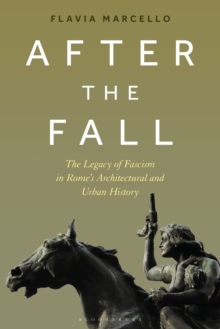
| Description: | Select Guide Rating After the Fall explores the many traces of fascism that can be found in the architecture and urban form of Rome – from its buildings, monuments and piazze, to its street names and graffiti. It reveals how the legacy of this short period in history shaped - and continues to shape - Rome’s contemporary cityscape in powerful ways, and examines what this can tell us about the persistence of troubling political and historical legacies in the built environment. Italy’s fascist period (1922-1943) is perhaps the least-understood episode of Rome’s architectural history. Yet paradoxically those two decades have, arguably more than any other, defined our contemporary view of Rome’s world-famous ancient, Renaissance, and Baroque urban landscapes. The book examines the ways in which the fascist regime sought to remake Rome according to its own vision of the past, and surveys the afterlife of Mussolini’s architectural and urban projects, from the Roman Masterplan to the Foro Italico. Internationally, there is currently much debate on the controversial status of public monuments - their abandonment, defacement, re-integration or removal - and, as After the Fall demonstrates, Rome provides a rich setting in which to examine these topical, pressing questions. Adding a new chapter to the architectural history of Rome, this fascinating history brings architecture, politics, and art together as living, contested experiences in a host of different locations around contemporary Rome. After the Fall explores the many traces of fascism that can be found in the architecture and urban form of Rome – from its buildings, monuments and piazze, to its street names and graffiti. It reveals how the legacy of this short period in history shaped - and continues to shape - Rome’s contemporary cityscape in powerful ways, and examines what this can tell us about the persistence of troubling political and historical legacies in the built environment. Italy’s fascist period (1922-1943) is perhaps the least-understood episode of Rome’s architectural history. Yet paradoxically those two decades have, arguably more than any other, defined our contemporary view of Rome’s world-famous ancient, Renaissance, and Baroque urban landscapes. The book examines the ways in which the fascist regime sought to remake Rome according to its own vision of the past, and surveys the afterlife of Mussolini’s architectural and urban projects, from the Roman Masterplan to the Foro Italico. Internationally, there is currently much debate on the controversial status of public monuments - their abandonment, defacement, re-integration or removal - and, as After the Fall demonstrates, Rome provides a rich setting in which to examine these topical, pressing questions.Adding a new chapter to the architectural history of Rome, this fascinating history brings architecture, politics, and art together as living, contested experiences in a host of different locations around contemporary Rome. |
| Imprint Name: | Bloomsbury Visual Arts |
| Publisher Name: | Bloomsbury Publishing PLC |
| Country of Publication: | GB |
| Publishing Date: | 2024-01-25 |