
Description
| Product ID: | 9781138837744 |
| Product Form: | Paperback / softback |
| Country of Manufacture: | GB |
| Title: | Architecture and the Forest Aesthetic |
| Subtitle: | A New Look at Design and Resilient Urbanism |
| Authors: | Author: Jana VanderGoot |
| Page Count: | 276 |
| Subjects: | Architecture, Architecture, Theory of architecture, Environmentally-friendly (‘green’) architecture and design, Landscape architecture and design, City and town planning: architectural aspects, Forests and woodland, Environmental science, engineering and technology, Forestry and silviculture, The Earth: natural history: general interest, Theory of architecture, Environmentally-friendly architecture & design, Landscape art & architecture, City & town planning - architectural aspects, Forests, rainforests, Environmental science, engineering & technology, Forestry & silviculture: practice & techniques, The Earth: natural history general |
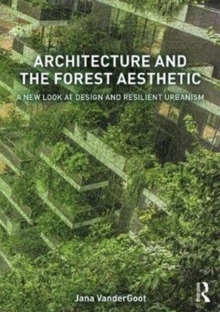
| Description: | Select Guide Rating Architecture and the Forestry Aesthetic presents forestry as a radical tool for re-imagining architecture and sustainable cities. This book shows you how forestry is a design language, an approach to aesthetics, inspired by permeable floors, protective canopies, connected food chains, and resilient ecological, social, and economic systems. Thirty speculative, historical, and contemporary case studies in eighteen countries on five continents are illustrated with more than 300 images to help you apply the lessons learned to your own work. Also includes essays by Charles Waldeim and Elizabeth Meyer, a glossary, and further reading. Despite population trends toward urbanization, the forest continues to have a strong appeal to the human imagination, and the human preference for forest over many other types of terrain is well documented. This book re-imagines architecture and urbanism by allowing the forest to be a prominent consideration in the language of design, thus recognizing the forest as essential rather than just incidental to human well-being. In Architecture and the Forest Aesthetic, forest is a large-scale urban construct that is far more extensive and nuanced than trees and shrubbery. The forest aesthetic opens designers to the forest as a model for an urban architecture of permeable floors, protective canopies, connected food chains, beneficial decomposition, and resilient ecologies. Much can be learned about these features of the forest from the natural sciences; however, when they are given due consideration technically and metaphorically in the design of urban habitat, the places in which humans live become living forests. What is present here in Architecture and the Forest Aesthetic is both a review of many ingenious ways in which the forest aesthetic has already been expressed in design and urbanism, and an encouragement to further use the forest aesthetic in design language and design outcomes. Case study projects featured include the Chilotan building craft of Southern Chile, the yaki sugi of Japan, the Biltmore Forest in the Southeastern United States, the Australian capital city Canberra, Bosco Verticale in Milan, Italy, the Beijing Olympic Forest Park in China, and more. |
| Imprint Name: | Routledge |
| Publisher Name: | Taylor & Francis Ltd |
| Country of Publication: | GB |
| Publishing Date: | 2017-12-20 |