
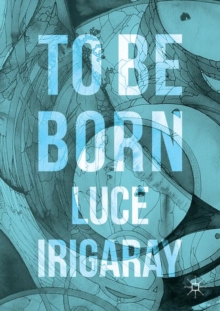
Description
| Product ID: | 9783319392219 |
| Product Form: | Paperback / softback |
| Country of Manufacture: | CH |
| Title: | To Be Born |
| Subtitle: | Genesis of a New Human Being |
| Authors: | Author: Luce Irigaray |
| Page Count: | 106 |
| Subjects: | Philosophy of language, Philosophy of language, Western philosophy from c 1800, Philosophy: metaphysics and ontology, Social and political philosophy, Western philosophy, from c 1900 -, Philosophy: metaphysics & ontology, Social & political philosophy |
| Description: | Select Guide Rating “According to the words of Phaedrus in the Symposium of Plato, Love, sometimes named Eros, has no parents, no age, no history, and its origin remains unknown to anyone. Love, whose destiny is said to be unique amongst the gods and humans, perhaps embodies desire for a conjunction always in search of its happening. Love would represent a dynamism longing for the copula incarnating the transcendence of our being. As such, Love would remain the everlasting yearning for the accomplishment of the ecstatic destiny of humanity.” In this book, Luce Irigaray - philosopher, linguist, psychologist and psychoanalyst - proposes nothing less than a new way of conceiving what a human being is as well as a means to ensure our individual and relational development from birth. Unveiling the mystery of our origin is probably what most motivates our quests and plans. And yet such a disclosure proves to be impossible. Indeed we were born as one from a union between two, and we are forever deprived of an origin of our own. Hence our ceaseless search for roots: in our genealogy, in the place where we were born, in our culture, religion or language. But a human being cannot develop from its own roots as a tree does. As humans, we must take responsibility for our own being and existence without any given continuity with our origin and background. How can we achieve that? First by cultivating our breathing, which is more than a means to come into the world and to exist; breathing also allows us to transcend mere survival to secure for ourselves a spiritual becoming. Taking on our sexuate belonging is the second element which enables us to assume our natural existence. Indeed, this determination at once brings us energy and provides us with a structure which contributes to our individuation and our relations with other living beings and the world. Our sexuation can compensate for our absence of roots too by compelling us to unite with the other sex so that we freely approach the copulative conjunction from which we were born; that is, the mystery of our origin. This does not occur through a mere sexual instinct or drive, but requires us to cultivate desire and love with respect for our mutual difference(s). In this way we can give rise to a new human being, not only at a natural but also at an ontological level. "According to the words of Phaedrus in the Symposium of Plato, Love, sometimes named Eros, has no parents, no age, no history, and its origin remains unknown to anyone. Love, whose destiny is said to be unique amongst the gods and humans, perhaps embodies desire for a conjunction always in search of its happening. Love would represent a dynamism longing for the copula incarnating the transcendence of our being. As such, Love would remain the everlasting yearning for the accomplishment of the ecstatic destiny of humanity."
In this book, Luce Irigaray - philosopher, linguist, psychologist and psychoanalyst - proposes nothing less than a new way of conceiving what a human being is as well as a means to ensure our individual and relational development from birth. Unveiling the mystery of our origin is probably what most motivates our quests and plans. And yet such a disclosure proves to be impossible. Indeed we were born as one from a union between two, and we are forever deprived of an origin of our own. Hence our ceaseless search for roots: in our genealogy, in the place where we were born, in our culture, religion or language. But a human being cannot develop from its own roots as a tree does. As humans, we must take responsibility for our own being and existence without any given continuity with our origin and background. How can we achieve that? First by cultivating our breathing, which is more than a means to come into the world and to exist; breathing also allows us to transcend mere survival to secure for ourselves a spiritual becoming. Taking on our sexuate belonging is the second element which enables us to assume our natural existence. Indeed, this determination at once brings us energy and provides us with a structure which contributes to our individuation and our relations with other living beings and the world. Our sexuation can compensate for our absence of roots too by compelling us to unite with the other sex so that we freely approach the copulative conjunction from which we were born; that is, the mystery of our origin. This does not occur through a mere sexual instinct or drive, but requires us to cultivate desire and love with respect for our mutual difference(s). In this way we can give rise to a new human being, not only at a natural but also at an ontological level. |
| Imprint Name: | Springer International Publishing AG |
| Publisher Name: | Springer International Publishing AG |
| Country of Publication: | GB |
| Publishing Date: | 2017-02-24 |