
Description
| Product ID: | 9781350194564 |
| Product Form: | Paperback / softback |
| Country of Manufacture: | GB |
| Series: | Bloomsbury Studies in Classical Reception |
| Title: | Sex, Symbolists and the Greek Body |
| Authors: | Author: Dr Richard Warren |
| Page Count: | 280 |
| Subjects: | Theory of art, Theory of art, History of art, History of art, Ancient history, History, History of art: ancient & classical art,BCE to c 500 CE, History of art & design styles: c 1800 to c 1900, Ancient history: to c 500 CE, Modern history to 20th century: c 1700 to c 1900, c 1800 to c 1900 |
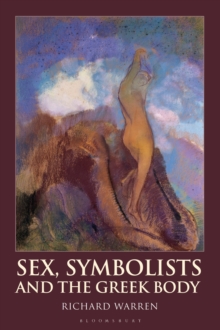
| Description: | Select Guide Rating This book explores Symbolist artists’ fascination with ancient Greek art and myth, and how the erotic played a major role in this. For a brief period at the end of the 19th century the Symbolist movement inspired artists to turn inwards to the unconscious mind, endeavouring to unveil the secrets of human nature through their symbolic art. But above all their greatest interest, and fear, was man (and woman’s) sexuality. Building upon the traditions of Academic neoclassicism, but fired with a new zeal, they turned back to Greek art and myth for inspiration. That classical legacy was once again a vehicle for artists to express their dreams, ideas and revelries. And so too their anxieties. For at times the frightening spectre of the sexual unconscious drove them to a new and innovative engagement with antiquity, including in ways never before tried in the history of the classical tradition. The unnerving sirens of Gustave Moreau, unearthly heroines of Odilon Redon, or leering fauns of Felicien Rops all played their role, among others, in this novel and unprecedented chapter in that tradition. This book shows how in their painting, drawing and sculpture the Symbolists re-invented Greek statuary and transposed it to new and unwonted contexts, as the imaginary inner worlds of artists were mapped onto the landscapes of Greek myth. It shows how they made of the Greek body, whether female, male, androgyne or sexual other, at once an object of beauty, desire, fear, and - at times - of horror. This book explores Symbolist artists’ fascination with ancient Greek art and myth, and how the erotic played a major role in this. For a brief period at the end of the 19th century the Symbolist movement inspired artists to turn inwards to the unconscious mind, endeavouring to unveil the secrets of human nature through their symbolic art. But above all their greatest interest, and fear, was man (and woman’s) sexuality. Building upon the traditions of Academic neoclassicism, but fired with a new zeal, they turned back to Greek art and myth for inspiration. That classical legacy was once again a vehicle for artists to express their dreams, ideas and revelries. And so too their anxieties. For at times the frightening spectre of the sexual unconscious drove them to a new and innovative engagement with antiquity, including in ways never before tried in the history of the classical tradition. The unnerving sirens of Gustave Moreau, unearthly heroines of Odilon Redon, or leering fauns of Felicien Rops all played their role, among others, in this novel and unprecedented chapter in that tradition. This book shows how in their painting, drawing and sculpture the Symbolists re-invented Greek statuary and transposed it to new and unwonted contexts, as the imaginary inner worlds of artists were mapped onto the landscapes of Greek myth. It shows how they made of the Greek body, whether female, male, androgyne or sexual other, at once an object of beauty, desire, fear, and - at times - of horror. |
| Imprint Name: | Bloomsbury Academic |
| Publisher Name: | Bloomsbury Publishing PLC |
| Country of Publication: | GB |
| Publishing Date: | 2021-05-20 |