
Use coupon code “MARCH20” for a 20% discount on all items! Valid until 31-03-2025

Site Logo
Search Suggestions

      Royal Mail  express delivery to UK destinations

      Regular sales and promotions

      Stock updates every 20 minutes!

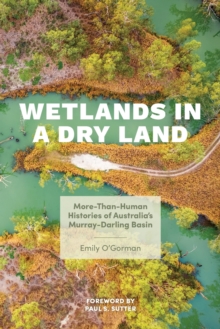
      Wetlands in a Dry Land: More-Than-Human Histories of Australia’s Murray-Darling Basin

      Out of stock

      Firm sale: non returnable item
      SKU 9780295749150 Categories ,
      Winner of the Inaugural Book Prize from the Australia & Aotearoa New Zealand Environmental History NetworkA compelling environmental history of a critical ecosystem under threatIn the name of agriculture, urban growth, and disease control, humans have drained, filled, or otherwise destroyed nearly 8...

      £25.99

      Buy new:

      Delivery: UK delivery Only. Usually dispatched in 1-2 working days.

      Shipping costs: All shipping costs calculated in the cart or during the checkout process.

      Standard service (normally 2-3 working days): 48hr Tracked service.

      Premium service (next working day): 24hr Tracked service – signature service included.

      Royal mail: 24 & 48hr Tracked: Trackable items weighing up to 20kg are tracked to door and are inclusive of text and email with ‘Leave in Safe Place’ options, but are non-signature services. Examples of service expected: Standard 48hr service – if ordered before 3pm on Thursday then expected delivery would be on Saturday. If Premium 24hr service used, then expected delivery would be Friday.

      Signature Service: This service is only available for tracked items.

      Leave in Safe Place: This option is available at no additional charge for tracked services.

      Description

      Product ID:9780295749150
      Product Form:Paperback / softback
      Country of Manufacture:US
      Series:Weyerhaeuser Environmental Books
      Title:Wetlands in a Dry Land
      Subtitle:More-Than-Human Histories of Australia's Murray-Darling Basin
      Authors:Author: Emily O'Gorman, Paul S. Sutter
      Page Count:288
      Subjects:Ecological science, the Biosphere, Ecological science, the Biosphere, Limnology (inland waters), Wetlands, swamps, fens, Limnology (freshwater), Wetlands, swamps, fens, Australia
      Description:Winner of the Inaugural Book Prize from the Australia & Aotearoa New Zealand Environmental History NetworkA compelling environmental history of a critical ecosystem under threatIn the name of agriculture, urban growth, and disease control, humans have drained, filled, or otherwise destroyed nearly 87 percent of the world’s wetlands over the past three centuries. Unintended consequences include biodiversity loss, poor water quality, and the erosion of cultural sites, and only in the past few decades have wetlands been widely recognized as worth preserving. Emily O’Gorman asks, What has counted as a wetland, for whom, and with what consequences?Using the Murray-Darling Basin—a massive river system in eastern Australia that includes over 30,000 wetland areas—as a case study and drawing on archival research and original interviews, O’Gorman examines how people and animals have shaped wetlands from the late nineteenth century to today. She illuminates deeper dynamics by relating how Aboriginal peoples acted then and now as custodians of the landscape, despite the policies of the Australian government; how the movements of water birds affected farmers; and how mosquitoes have defied efforts to fully understand, let alone control, them. Situating the region’s history within global environmental humanities conversations, O’Gorman argues that we need to understand wetlands as socioecological landscapes in order to create new kinds of relationships with and futures for these places.

      Winner of the Inaugural Book Prize from the Australia & Aotearoa New Zealand Environmental History Network

      A compelling environmental history of a critical ecosystem under threat

      In the name of agriculture, urban growth, and disease control, humans have drained, filled, or otherwise destroyed nearly 87 percent of the world’s wetlands over the past three centuries. Unintended consequences include biodiversity loss, poor water quality, and the erosion of cultural sites, and only in the past few decades have wetlands been widely recognized as worth preserving. Emily O’Gorman asks, What has counted as a wetland, for whom, and with what consequences?

      Using the Murray-Darling Basin—a massive river system in eastern Australia that includes over 30,000 wetland areas—as a case study and drawing on archival research and original interviews, O’Gorman examines how people and animals have shaped wetlands from the late nineteenth century to today. She illuminates deeper dynamics by relating how Aboriginal peoples acted then and now as custodians of the landscape, despite the policies of the Australian government; how the movements of water birds affected farmers; and how mosquitoes have defied efforts to fully understand, let alone control, them. Situating the region’s history within global environmental humanities conversations, O’Gorman argues that we need to understand wetlands as socioecological landscapes in order to create new kinds of relationships with and futures for these places.


      Imprint Name:University of Washington Press
      Publisher Name:University of Washington Press
      Country of Publication:GB
      Publishing Date:2021-07-13

      Additional information

      Weight404 g
      Dimensions153 × 229 × 22 mm